


How Fail-Safe Braking Systems Improve Safety in Industrial Motion Applications

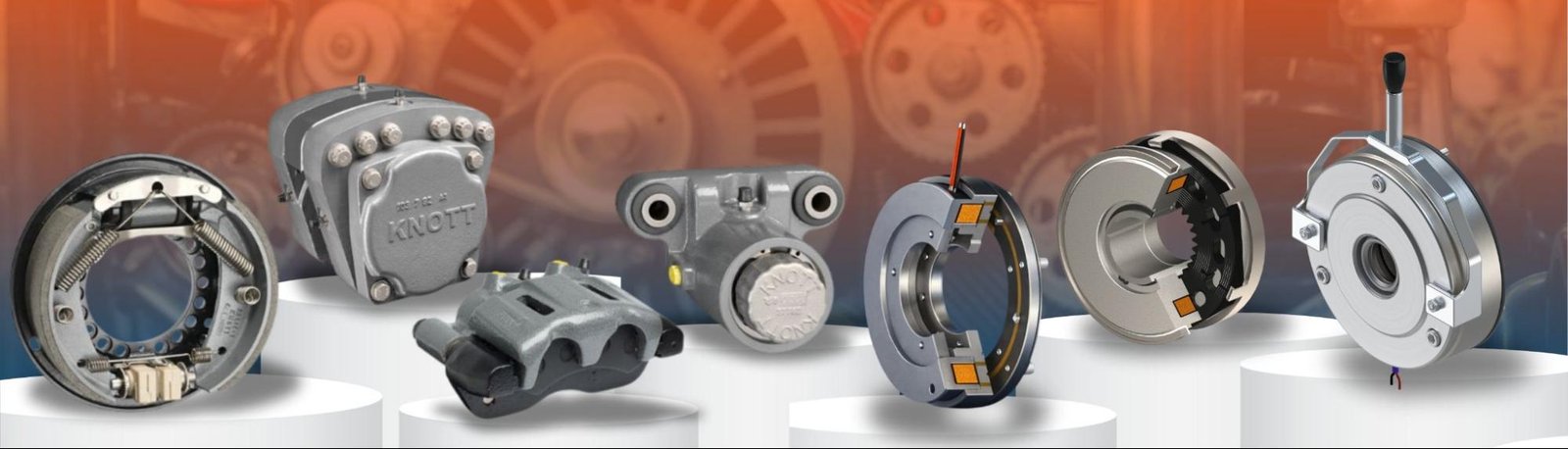
Knott Vortex is a manufacturing company specializing in advanced braking solutions. This article discusses the critical role of fail-safe braking systems in maintaining safety and operational integrity across industrial motion applications. We will explore the principles, types, and crucial benefits of fail-safe brakes and how they form the backbone of modern industrial safety brakes.
Understanding the Critical Need for Fail-Safe Braking Systems
In the demanding environment of modern manufacturing and heavy industrial applications, machinery performance is paramount. However, safety must always come first. Equipment failures—such as power loss, motor overload, or system faults—can lead to catastrophic consequences, including damage to expensive machinery, production downtime, and, most critically, personnel injury.
This is where fail-safe braking systems become indispensable. Unlike standard braking systems that require an external input (like hydraulic pressure or an electric current) to engage, a fail-safe brake is engineered to automatically engage when power or pressure is lost. The system’s default state is braked, ensuring that in the event of any failure, the load is immediately stopped and held securely. This principle is why these are often referred to as industrial safety brakes.
The Core Principle of a Fail-Safe Brake
The term “fail-safe” is a design philosophy: it guarantees that any failure condition results in a non-hazardous state. For braking systems, this non-hazardous state is complete engagement.
Most fail-safe braking systems achieve this using powerful spring assemblies. In operation, an electromagnetic force or hydraulic pressure is applied to release the brake against the spring force. If the power or pressure is cut (the “fail” condition), the spring instantly forces the brake pads or friction elements together, generating the necessary torque to stop the motion and secure the load. This mechanism provides an uncompromised level of safety, making it a foundation of reliable industrial motion applications.
Key Types of Fail-Safe Braking Systems
Knott Vortex offers a portfolio of industrial braking solutions that includes various types of fail-safe brakes, each suited to specific application requirements and environments.
1. Spring-Applied Brakes (Electromagnetic and Hydraulic)
Spring-applied brakes are the most common type of fail-safe brake used in industrial motion applications.
- Hydraulic Spring-Applied Brakes: Often used in mobile and heavy-duty Traditional brake systems (like the Traditional brake systems offered by Knott Vortex leveraging KNOTT GmbH technology), the brake is held open by hydraulic pressure. Loss of pressure (due to a leak or pump failure) causes the springs to apply the brake, delivering a reliable safety brake action for large loads.
- Electromagnetic Spring-Applied Brakes: In these units, the springs are held compressed by an electromagnetic coil when power is applied. Upon power failure, the electromagnetic force vanishes, and the springs instantly engage the brake. These are highly valued in robotics, servo motors, and automated machinery that require precision holding brake functions. Knott Vortex’s range of electromagnetic brakes includes several spring-applied models specifically designed for fail-safe operation.
2. Permanent Magnet Brakes
While not strictly categorized by the spring-applied principle, permanent magnet brake systems can also be engineered to be fail-safe. They rely on the magnetic field of permanent magnets to apply the braking torque, which is then released by an opposing magnetic field generated by an electric current. If the power supply fails, the release field disappears, and the natural magnetic force stops the motion. This design offers a compact, high-torque safety brake solution, particularly popular in sophisticated automation and servo systems.
Where Fail-Safe Braking Systems Are Essential
The application of fail-safe braking systems is not limited to a single sector but is critical wherever motion control failure poses a risk. These industrial safety brakes are necessary for compliance and peace of mind across many demanding industrial motion applications:
| Industry/Application | Critical Function/Hazard | Required Fail-Safe Action |
|---|---|---|
| Cranes and Lifting Equipment | Power failure while holding a load; load creep | Immediate, secure holding of the vertical load. |
| Robotics and Automation | Loss of power or communication to a servo motor | Precise, quick stop to prevent tool damage or collision. |
| Escalators and Elevators | Motor failure or overspeed condition | Secure stop and holding to prevent uncontrolled motion. |
| Industrial Conveyors | Motor gearbox failure on an incline | Prevent rollback and secure the product load. |
| Off-Highway Vehicles | Engine or hydraulic failure on a slope | Reliable parking brake engagement (safety brake). |
The Non-Negotiable Benefits of Fail-Safe Brakes
Integrating a robust fail-safe brake into an industrial system delivers multiple benefits that extend beyond basic safety compliance.
1. Enhanced Personnel Safety
This is the primary and most vital benefit. By automatically engaging when power is lost, fail-safe braking systems prevent uncontrolled motion of machinery. This eliminates the risk of crushing, pinching, or impact injuries to operators and maintenance personnel working near the equipment. The reliable stopping action of industrial safety brakes is a foundation of modern workplace safety protocols.
2. Machinery and Load Protection
Uncontrolled motion can destroy machinery. A sudden stop due to a fault can damage gearboxes, motors, and sensitive components. A properly sized fail-safe brake manages this sudden stop, arresting motion in a controlled manner that minimizes stress on the drivetrain components. Furthermore, in applications like automated warehousing, the holding brake prevents valuable goods from falling or being damaged.
3. Reliability and Uptime
While it seems counterintuitive, designing for failure improves reliability. Knowing that the industrial braking solution will function precisely when all else fails allows engineers to design more efficient and faster systems. The inherent reliability of the fail-safe brake reduces the probability of catastrophic breakdown, minimizing downtime and the need for expensive emergency repairs.
4. Compliance with International Standards
In many global markets, the use of fail-safe braking systems is a regulatory requirement for lifting and overhead transport equipment. Knott Vortex, leveraging its global engineering expertise and proven European brake technology (KNOTT GmbH), ensures its industrial braking solutions meet stringent standards, including those often referenced by regulatory bodies. Specifying a fail-safe brake helps OEMs and end-users ensure compliance.
Knott Vortex’s Commitment to Industrial Safety Brakes
Knott Vortex recognizes that safety cannot be an afterthought; it must be integrated into the core design of every industrial system. Our focus on fail-safe braking systems is driven by this understanding.
Our range of electromagnetic brakes and permanent magnet brakes provides solutions for high-precision, high-speed automation where quick response is vital. Simultaneously, our offering of Traditional brake technologies includes robust, heavy-duty options like hydraulic spring-applied and wedge-actuated systems, perfectly suited as industrial safety brakes for construction and mining equipment.
Our approach is defined by:
- Application-Focused Engineering: We design and manufacture fail-safe brakes not as off-the-shelf components, but as engineered industrial braking solutions optimized for a customer’s unique torque requirements, duty cycle, and operating environment.
- Quality and Reliability: Combining global engineering expertise with local manufacturing strength ensures every safety brake meets rigorous ISO quality standards, providing long-term, dependable performance in critical industrial motion applications.
Conclusion
The evolution of industrial machinery demands a corresponding evolution in safety systems. Fail-safe braking systems are a cornerstone of this evolution, offering an absolute guarantee that equipment will stop and hold when it matters most.
Whether the application requires the rapid response of a compact permanent magnet brake for robotics, the reliable holding brake action of an electromagnetic brake for an automated storage system, or a heavy-duty Traditional fail-safe brake for mobile machinery, Knott Vortex provides the specialized industrial braking solutions necessary to secure personnel, protect assets, and ensure peak performance across all industrial motion applications.